
What Are the Best Printed Circuit Boards in China?
Choosing the best printed circuit boards in China requires more than comparing factory prices. It demands evidence, technical judgment, and patience. China offers advanced multilayer boards, rigid-flex circuits, HDI designs, and quick-turn prototypes. However, quality varies between suppliers. A polished website proves little.
Happy Holden, a respected PCB engineer and author, has said, “The printed circuit board is the foundation of electronics.” That foundation must support electrical performance, mechanical strength, thermal control, and long-term reliability. Buyers should examine trace geometry, dielectric materials, impedance control, copper thickness, and surface finishes. They should also request current IPC certifications, UL recognition, ISO records, and product-specific test reports.
Factory experience matters. A reliable manufacturer should explain its drilling tolerances, lamination process, solder-mask inspection, and automated optical inspection results. Strong suppliers welcome sample audits. They provide clear documentation. They also identify weaknesses before production begins.
Cost still matters. It should not lead the decision. A cheaper board may bring cracked vias, inconsistent plating, or unstable solder joints. Those defects can appear only after assembly or thermal cycling. That delay is expensive.
The best Chinese PCB partner depends on the application. Consumer electronics need speed and flexibility. Medical, automotive, and aerospace projects require stricter traceability and validation. I would not call one factory universally superior. That conclusion would be too simple. The practical choice combines verified capability, transparent communication, realistic delivery promises, and repeatable quality. Careful readers should question every impressive claim and test performance themselves.
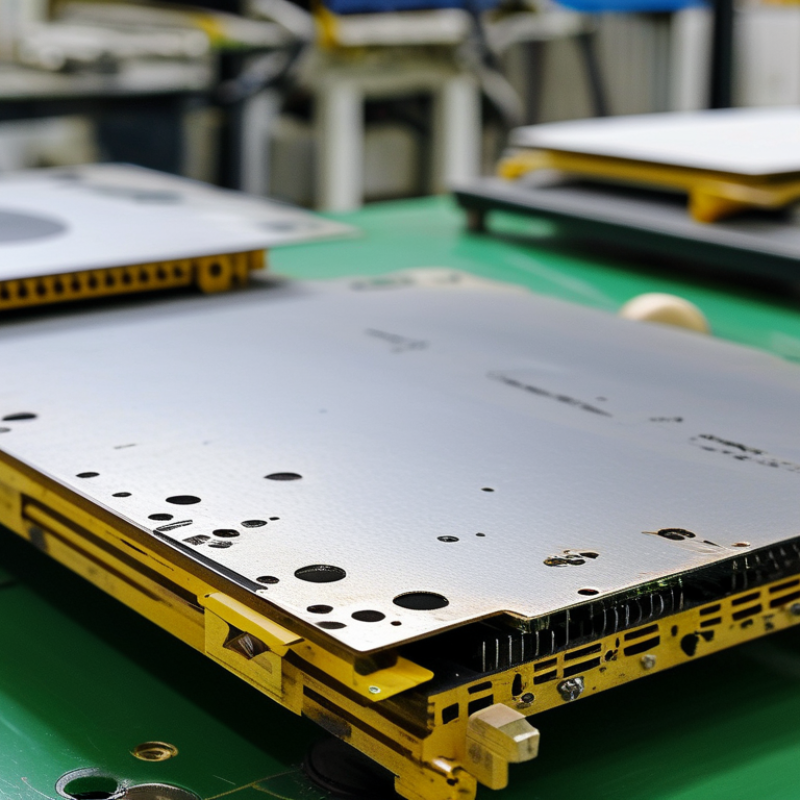
Types of Printed Circuit Boards Manufactured in China
What Are the Best Printed Circuit Boards in China?
China manufactures many printed circuit board types for consumer, industrial, automotive, and medical electronics. Single-sided boards offer simple routing and low production costs. Double-sided boards support denser layouts without excessive complexity. They suit power controls, household devices, and basic instrumentation. Simple layouts matter.
Multilayer PCBs use several copper layers separated by insulating material. Four-layer boards often balance signal performance, cost, and assembly space. High-density interconnect boards use microvias and fine traces for compact products. Flexible PCBs bend inside cameras, displays, and wearable devices. Rigid-flex boards combine stable sections with movable connections. Metal-core boards improve heat dissipation around high-power components. Ceramic boards handle demanding thermal and high-frequency applications.
A reliable evaluation includes more than a low quotation. Engineers should review material certificates, impedance reports, and test records. Automated optical inspection can identify solder and alignment defects. X-ray inspection helps examine hidden vias and complex assemblies. Cross-section analysis verifies layer structure and copper thickness. Supplier processes should align with relevant IPC requirements and documented quality systems. During production reviews, engineers also check drilling accuracy, surface finish, and thermal cycling results. Specifications can still miss real-world stress. I have seen designs that passed basic inspection but needed stronger heat management. Clear drawings, controlled revisions, and small pilot batches reduce that risk.
| PCB Type | Primary Construction | Typical Layer Configuration | Main Advantages | Common Applications | Typical Manufacturing Considerations | Relevant Standards or Requirements |
|---|---|---|---|---|---|---|
| Single-Sided PCB | One conductive copper layer laminated to an insulating substrate, commonly FR-4 or a paper-based phenolic material. | 1 copper layer | Low manufacturing cost, simple routing, fast production, and easy assembly. | LED lighting, basic controls, calculators, power supplies, and simple consumer electronics. | Best suited to low-complexity circuits; component density and routing options are limited. | IPC-2221 design guidance |
| Double-Sided PCB | Copper layers are located on both sides of the dielectric and connected through plated through-holes or vias. | 2 copper layers | More routing space than single-sided boards while maintaining a relatively economical structure. | Industrial controls, consumer electronics, automotive modules, instrumentation, and power control circuits. | Requires controlled hole plating and accurate registration between the two copper layers. | IPC-6012 performance specification |
| Multilayer PCB | Three or more copper layers separated by dielectric materials and bonded into a single board. | 4, 6, 8, 10, or more layers | High circuit density, improved signal integrity, dedicated power and ground planes, and reduced board size. | Computers, networking equipment, medical electronics, industrial automation, and advanced embedded systems. | Layer alignment, impedance control, lamination quality, via reliability, and thermal management are critical. | IPC-6012 and IPC-2221 |
| Rigid PCB | Uses a solid, non-flexing laminate structure, most commonly glass-reinforced epoxy such as FR-4. | 1 to multiple layers | Mechanical stability, predictable electrical performance, broad material availability, and easy automated assembly. | Consumer electronics, industrial equipment, telecommunications, automotive electronics, and control systems. | Material selection should consider dielectric constant, glass-transition temperature, copper weight, and operating temperature. | UL flammability and IPC requirements |
| Flexible PCB | Flexible copper-clad laminate, usually based on polyimide, with flexible insulating coverlay materials. | Single-sided, double-sided, or multilayer | Lightweight, bendable, space-saving, and capable of replacing wire harnesses in moving or compact assemblies. | Displays, cameras, wearable devices, medical instruments, automotive interiors, and compact electronics. | Bend radius, dynamic-flex cycles, stiffener placement, copper grain direction, and coverlay design must be controlled. | IPC-6013 performance specification |
| Rigid-Flex PCB | Combines rigid board sections with flexible interconnect sections in one integrated construction. | Rigid and flexible layers combined | Reduces connectors and assembly steps while improving packaging efficiency and reliability in constrained spaces. | Medical equipment, aerospace electronics, automotive systems, test instruments, and high-density portable devices. | Requires careful control of bend zones, transition areas, material compatibility, layer registration, and lamination. | IPC-6013 and IPC-2223 |
| Metal-Core PCB | Uses an aluminum or copper metal base with a dielectric layer and copper circuit layer for heat dissipation. | Usually single-layer or two-layer | Efficient thermal transfer, improved LED lifetime, and reduced operating temperature in power applications. | LED lighting, power converters, motor controls, automotive lighting, and high-power electronics. | Thermal resistance, dielectric breakdown voltage, metal thickness, and thermal interface design are important. | Thermal and electrical safety testing |
| High-Frequency PCB | Uses low-loss or controlled-dielectric materials designed for high-speed digital or radio-frequency signals. | Typically 2 to multilayer | Lower signal loss, controlled impedance, reduced dielectric variation, and improved performance at high frequencies. | Radar systems, wireless communication, antennas, satellite equipment, high-speed networking, and RF modules. | Material consistency, trace geometry, surface roughness, stack-up control, grounding, and impedance testing are essential. | Controlled impedance and IPC design practices |
| HDI PCB | High-density interconnect board using fine lines, microvias, sequential build-up technology, and compact component spacing. | Build-up layers with microvias | Higher wiring density, smaller form factor, shorter electrical paths, and improved signal performance. | Smartphones, tablets, portable medical devices, compact computing products, and advanced communication equipment. | Microvia reliability, laser drilling, fine-line imaging, sequential lamination, and registration accuracy require specialized processes. | IPC-2226 HDI design guidance |
| Thick-Copper PCB | Uses copper foil or plated copper significantly thicker than standard circuit-board copper. | Single-sided, double-sided, or multilayer | Handles higher current, improves heat distribution, and supports power paths with lower electrical resistance. | Battery systems, renewable-energy equipment, motor drives, power distribution, and industrial power electronics. | Etching compensation, plating uniformity, conductor spacing, thermal expansion, and heavy-component support must be considered. | Current-carrying and thermal design verification |
| Ceramic PCB | Uses ceramic substrates such as alumina, aluminum nitride, or silicon nitride with conductive metallization. | Usually single-layer or multilayer | Excellent thermal conductivity, low thermal expansion, high-temperature stability, and good electrical insulation. | Power modules, LED packages, automotive power electronics, high-temperature sensors, and microwave circuits. | Substrate selection, metallization method, thermal cycling, brittle-material handling, and coefficient-of-expansion matching are important. | Thermal cycling and insulation testing |
| LED Aluminum PCB | A metal-core circuit board, generally aluminum-based, designed to transfer heat away from LED components. | Commonly single-layer | Good heat dissipation, lightweight construction, dimensional stability, and suitability for high-power LED assemblies. | Streetlights, architectural lighting, industrial lamps, automotive lighting, and high-brightness LED products. | Thermal interface material, dielectric insulation, LED pad layout, soldering profile, and heat-sink attachment affect performance. | LED thermal and electrical safety requirements |
| Embedded-Component PCB | Passive or active components are placed within internal cavities or embedded layers of the board. | Multilayer or build-up structure | Smaller assemblies, shorter interconnections, improved electrical performance, and better component protection. | Miniaturized electronics, RF products, medical devices, automotive systems, and high-density modules. | Component tolerance, cavity formation, lamination pressure, thermal stress, inspection, and repairability require careful control. | Advanced assembly and reliability testing |
Related Posts
-
Why Choose a PCB Circuit Board for Your Project?
-
10 Best PCB Flex Technologies to Enhance Your Electronic Designs
-

2026 How to Master Circuit Board Design for Global Procurement?
-

What is PC Boards and Why are They Essential for Your Business?
-
5 Best Fast PCB Manufacturers for Quick Turnaround
-
Why Is PCB Production Important for Global Buyers?