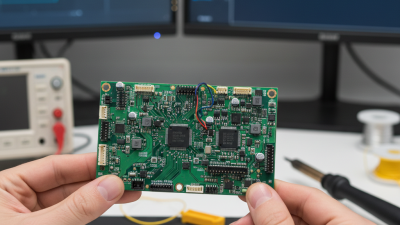
Finding a fast PCB manufacturer can feel like a race against a product launch deadline. Yet speed alone does not guarantee a dependable board. A supplier may promise three-day production, but unclear engineering reviews, delayed material checks, or weak quality controls can erase that advantage quickly. The real goal is balanced performance: short lead times, stable manufacturing, and predictable communication.
A reliable search begins with evidence. Review the manufacturer’s production capabilities, layer count limits, minimum trace spacing, surface finishes, and inspection process. Ask how orders move from Gerber files to fabrication, testing, and shipment. An experienced supplier should explain these steps clearly, not hide behind vague promises. Certifications, traceability records, sample boards, and customer feedback can also reveal whether the company consistently delivers.
Speed matters. Details matter more.
When comparing a fast PCB supplier, request a realistic quotation with tooling fees, shipping time, material availability, and prototype limits included. Confirm whether urgent orders receive dedicated engineering support or simply enter a crowded production queue. A small prototype can expose registration errors, solder mask problems, or unexpected impedance issues before larger production begins. This step may seem slower, but it often prevents costly rework.
No manufacturer is perfect. Even a respected partner can face material shortages or transport delays. That is why dependable communication deserves equal attention. Look for practical answers, documented processes, and a willingness to discuss risks honestly. The best fast PCB manufacturer is not merely the one offering the shortest schedule. It is the one that can meet that schedule without compromising board quality, technical accuracy, or your confidence.

A fast PCB manufacturer can only move quickly when your requirements are clear. Before requesting quotes, record board dimensions, layer count, copper weight, material, and target quantity. State whether prototypes and production boards need different specifications. Include Gerber files, drill files, pick-and-place data, assembly drawings, and revision numbers. Missing revision control creates expensive confusion. I have seen a small silkscreen change delay an otherwise ready build.
Define electrical requirements in measurable terms. Specify impedance-controlled traces, minimum trace and space, via types, hole tolerances, surface finish, and solder mask color. If the design includes fine-pitch components, state the smallest package and pad spacing. Tell the manufacturer your testing needs, such as flying-probe testing, bare-board testing, or functional testing. Add acceptance criteria for warpage, solderability, and cosmetic defects. Vague quality language sounds flexible, but it weakens accountability.
Production speed also depends on practical limits. Give the required delivery date, shipping location, forecast volume, and acceptable split shipments. Ask which steps are completed in-house and which are outsourced. Request sample panels, inspection records, and a clear process for engineering questions. A capable supplier should flag unbuildable features before fabrication, not after payment. Still, no checklist is perfect. Recheck the files after every design change, because a correct quote can follow an outdated dataset.
Typical standard-production planning benchmarks show that PCB layer count directly affects manufacturing lead time. Clearly specifying layer count, board material, copper weight, surface finish, quantity, and inspection requirements helps manufacturers provide accurate and faster quotations.
Planning reference: standard multilayer PCB production commonly requires more business days as layer count increases because of additional lamination, drilling, plating, and inspection steps. Actual lead times vary according to order quantity, design complexity, material availability, and certification requirements.
When searching for a fast PCB manufacturer, investigate production capability rather than advertised turnaround time. IPC’s 2024 electronics industry survey identifies capacity constraints, component availability, and delivery performance as major manufacturing concerns. Ask whether the factory owns rapid-turn lines or simply prioritizes urgent orders. That difference matters.
Request verifiable data from the last 90 days. Check average prototype lead time, on-time delivery rate, first-pass yield, and current production queue. IPC’s EMS statistical reporting treats these metrics as key indicators of operational reliability. A capable supplier should explain its numbers clearly. It should also show how quickly engineers review Gerber files, drill data, stackups, and material specifications. Ask for a sample DFM report. The details should include copper thickness, minimum trace spacing, via structures, and panel utilization.
Visit the factory virtually or in person when possible. Watch how engineering changes move from CAM review to fabrication. Confirm material stock before sending payment or releasing production files. Fast production is useless if laminate arrives three days late. It is also risky when inspection is compressed. Ask for electrical testing, AOI coverage, and final inspection records. A short lead time may hide rework.
I have seen “24-hour” promises fail because the quoted time excluded engineering review and shipping. That was my mistake, too. Therefore, compare complete cycle time, not one impressive number. Use a written schedule with approval deadlines, inspection points, and escalation contacts. Speed needs evidence.
Use the following measurable criteria to compare PCB manufacturers. Lead-time figures are practical planning benchmarks for standard prototype and production orders; actual timing depends on layer count, materials, quantity, testing, and engineering changes.
| Evaluation Dimension | Recommended Data Point | Rapid-Capability Benchmark | What to Verify | Why It Matters |
|---|---|---|---|---|
| Prototype Turnaround | Time from complete design approval to shipment | Approximately 1–5 working days for standard 2–4 layer prototype boards | Ask whether the quoted time includes engineering review, fabrication, electrical testing, and packing. | A short quoted lead time may exclude pre-production review or testing, so the total elapsed time should be confirmed. |
| Production Lead Time | Standard manufacturing time for repeat orders | Approximately 5–15 working days for standard multilayer production orders | Request separate lead times for prototype, low-volume, and volume production. | Manufacturers with dedicated production planning can usually provide more reliable repeat-order schedules. |
| Layer Capability | Supported number of copper layers | At least 2–8 layers for common rapid-turn PCB work | Confirm whether the rapid service applies to the required layer count, board thickness, and copper weight. | Additional layers increase lamination, drilling, registration, and inspection requirements. |
| Material Availability | Availability of standard laminate and special materials | Standard FR-4 materials available for immediate scheduling | Verify material type, glass-transition temperature, dielectric requirements, and stock status before ordering. | Material shortages can delay an otherwise fast manufacturing process. |
| Design Rule Support | Minimum trace width, spacing, drill size, and annular ring | Common prototype designs often use approximately 0.15–0.20 mm trace/space and 0.20–0.30 mm finished vias | Obtain the current design-for-manufacturing rules and run an automated design-rule check before release. | Designs that match the factory process require fewer engineering revisions and move into production faster. |
| Engineering Review | Time required for CAM and manufacturability feedback | Initial review completed within 1 working day for complete, valid files | Ask whether the review identifies missing drill files, solder-mask issues, copper clearances, and unclear specifications. | Early detection of fabrication problems prevents avoidable schedule interruptions. |
| File Acceptance | Supported manufacturing data formats | Gerber X2 or standard Gerber files plus Excellon drill data and fabrication drawings | Confirm required file naming, layer mapping, units, drill definitions, and revision-control procedures. | Complete and unambiguous data reduces clarification cycles and incorrect-build risk. |
| Electrical Testing | Availability of continuity and isolation testing | Electrical testing available for production and high-reliability orders | Confirm whether testing is flying-probe or fixture-based, and request the test coverage and reporting format. | Testing helps detect open circuits and short circuits before shipment. |
| Inspection Process | In-process and final inspection methods | Automated optical inspection for multilayer or fine-pitch assemblies, with final visual inspection | Ask for inspection standards, sampling plans, defect classification, and available inspection records. | Documented inspection improves consistency while reducing the chance of receiving defective boards. |
| Surface Finish | Available finish and intended application | HASL, lead-free HASL, and ENIG are common options for prototype and production boards | Confirm finish thickness, flatness requirements, solderability needs, and compatibility with fine-pitch components. | Surface finish affects assembly performance, shelf life, cost, and suitability for fine-pitch parts. |
| Quality Standard | Manufacturing and acceptance standards | Documented quality system with IPC-based workmanship and acceptance criteria | Request certificates, revision-controlled process documents, corrective-action procedures, and sample inspection reports. | Formal quality controls make rapid production more repeatable and auditable. |
| Capacity and Scheduling | Available production slots and daily or weekly capacity | Confirmed capacity for the required quantity before purchase-order release | Ask how urgent orders are prioritized and whether capacity is reserved after design approval. | A fast process is useful only when the manufacturer has available capacity at the required time. |
| Order Quantity Flexibility | Minimum order quantity and scalable batch size | Prototype quantities from a few boards, with a defined path to repeat production | Compare prototype pricing, minimum production quantity, panelization rules, and repeat-order setup requirements. | A supplier that supports both prototypes and production can reduce transfer delays between development stages. |
| Communication Speed | Response time for quotations and technical questions | Quotation or technical acknowledgement within 1 working day for complete requirements | Use a sample inquiry to measure response quality, clarification accuracy, and revision handling. | Fast, technically accurate communication prevents delays caused by incomplete or misunderstood requirements. |
| Shipping and Delivery | Time from finished inspection to delivery location | Shipping time quoted separately from manufacturing lead time | Confirm carrier options, tracking, export documentation, packaging, and delivery-time estimates. | Total time to the assembly site includes both factory processing and transportation. |
| Traceability | Ability to track materials, batches, revisions, and inspection results | Lot identification and revision-controlled production records available | Ask how board lots are labeled and how nonconformities, rework, and complaints are recorded. | Traceability supports root-cause analysis and makes repeat orders more consistent. |
Speed matters when a delayed board holds back testing, assembly, or a product launch. Compare quoted lead times with actual production records, not promises alone. Ask whether the schedule includes engineering review, material sourcing, fabrication, inspection, and shipping. A five-day build may become twelve days after clarification delays. Request a sample timeline for your board’s layer count and finish. This reveals how the manufacturer handles realistic conditions.
Quality must remain stable under pressure. Check documented process controls, inspection methods, traceability, and relevant certifications. Ask for test reports, sample inspection images, and defect data when available. Experienced manufacturers should explain impedance control, drill accuracy, solder mask alignment, and surface finish clearly. Pricing needs equal attention. Compare complete quotations, including tooling, testing, setup, shipping, and possible redesign charges. The lowest price can hide weak inspection or uncertain materials. I have seen rushed comparisons fail because buyers counted factory days only. That assumption deserves a second look.
Tips: Send complete Gerber files, drill data, stack-up details, and quantity requirements. Ask for written lead-time commitments. Compare at least three detailed quotations. Verify whether faster service changes inspection depth. Keep a small schedule buffer. It protects your launch. When communication feels vague, slow down and ask sharper questions. Reliability is often visible before production begins.
A fast PCB manufacturer should prove speed during prototyping, not merely promise short lead times. Request a sample build with your actual layer count, material, copper weight, and smallest drill size. Review the first article carefully. Check hole quality, solder mask alignment, surface finish, and impedance reports. A rushed prototype may expose weaknesses that become expensive during production.
Tips: Ask for a sample timeline, inspection photos, and a clear revision process. Confirm whether engineering staff review Gerber files before fabrication. Good technical support can identify narrow clearances, missing solder-mask openings, or unsuitable stack-ups early. Ask who answers urgent questions. A sales contact may not understand signal integrity or thermal design.
Capacity also needs evidence. Request current monthly output, available equipment, inspection methods, and typical queue times for your board type. Verify whether prototyping and mass production use compatible processes. Otherwise, your approved prototype may not transfer smoothly. I once underestimated the effect of a factory’s holiday schedule. The quoted lead time looked excellent, but production slipped because capacity was already committed. That experience changed my checklist.
Reliable manufacturers explain delays before they happen. They provide traceable test records, material certificates, and realistic delivery dates. Technical support should remain available after the order begins. Fast service is useful. Consistent quality matters more. Judge both.
A fast PCB manufacturer should prove capability through samples, not promises. IPC’s 2024 Global Sentiment of the Electronics Supply Chain Report identified delivery reliability, material availability, and rising costs as major industry pressures. Speed alone can hide process weaknesses. A prototype may arrive quickly, yet fail during soldering or electrical testing.
Request samples built from your actual Gerber files, stack-up, and bill of materials. Inspect hole position, annular rings, solder mask registration, surface finish, and board thickness. Measure impedance when controlled-impedance traces matter. Ask for the lot code, material certificate, and electrical test record. IPC-6012 provides useful performance and qualification requirements for rigid printed boards. Use it as a technical reference, not decorative paperwork.
Run the sample through realistic assembly conditions. Check warpage after reflow. Examine lifted pads, pinholes, solder bridging, and uneven plating. Record results with photographs and measured values. The NIST Engineering Statistics Handbook emphasizes repeatable measurement and process variation, which are more useful than one attractive board. One sample is not enough. Request a second lot.
A manufacturer should explain failures without defensiveness. That matters. Ask how corrective actions are documented and verified. I would not choose the lowest quotation after one successful delivery. My judgment could still be wrong. A small pilot order, with agreed acceptance criteria and response times, reveals more than a sales presentation. The best long-term partner is not merely fast; its process remains predictable when volumes, designs, or materials change.