How to Choose the Right ELCB Switch in 2026?
Choosing the right Elcb Switch in 2026 is a safety decision, not merely a purchasing decision. Modern homes and workplaces contain chargers, inverters, heat pumps, and sensitive electronic equipment. Each device can influence leakage-current behavior.
The International Energy Agency’s Electricity 2024 report expects global electricity demand to grow by about 4% in both 2024 and 2025. More connected equipment means more complex protection requirements. Electrical Safety First also continues to warn that residual-current protection cannot replace inspection, testing, and competent installation. Small details matter. A damp garage is not the same as a dry office.
Mike Holt, a widely cited electrical-training specialist, states, “Protect the conductors, not just the equipment.” This principle helps frame every Elcb Switch comparison. Buyers should examine rated current, residual operating current, trip characteristics, pole configuration, breaking capacity, and compatibility with Type A, AC, or Type B applications. IEC 60364-4-41 provides the technical foundation for protection against electric shock, while NFPA 70 sets relevant installation requirements in the United States. Local rules still control the final selection.
A cheaper device may look attractive. It may also trip unnecessarily or fail to suit modern loads. That possibility deserves attention. This guide compares practical specifications, environmental conditions, certification evidence, and maintenance needs. It also questions a common mistake: choosing sensitivity figures without understanding the connected equipment. The best Elcb Switch is not simply the fastest option. It is the correctly rated device, installed, tested, and reviewed for the actual circuit.
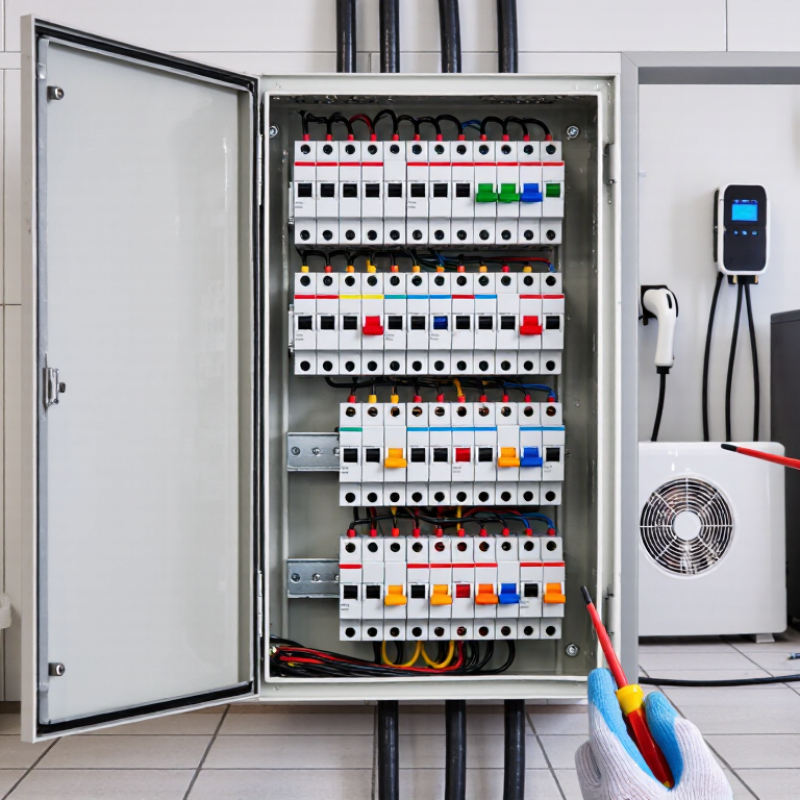
What an ELCB Switch Does and Why It Matters in 2026
How to Choose the Right ELCB Switch in 2026?
An ELCB switch monitors leakage current and disconnects power when insulation fails. This action can limit electric shock, overheating, and fire risks. Modern installations usually use current-operated residual-current devices, often called RCCBs or RCDs. Older voltage-operated ELCBs may not provide equivalent protection. Not every ELCB is the same.
The device should match the circuit’s voltage, poles, load, residual-current rating, and waveform requirements. For personal protection, 30 mA sensitivity is widely specified under IEC 60364-4-41, although local electrical codes remain decisive. A qualified installer should also confirm coordination with circuit breakers. An ELCB does not replace overload protection. That mistake still happens.
The risk is measurable. NFPA’s Home Structure Fires analysis reported an annual average of about 31,500 U.S. home fires involving electrical distribution and lighting equipment from 2016 to 2020. These fires caused roughly 470 civilian deaths and 1,100 injuries each year. A practical inspection should test the device’s reset function, leakage response, enclosure condition, and neutral wiring. Pressing the test button is useful, but it is not a complete verification. Real-world faults can behave differently. Overlooking humidity, aging cables, or nuisance tripping can produce false confidence.
How to Choose the Right ELCB Switch in 2026?
An ELCB switch—commonly referring to a residual-current circuit breaker (RCCB)—disconnects a circuit when leakage current reaches its rated residual operating current. The correct setting depends on the protection objective, installation design, and local electrical code.
The chart shows common residual operating-current ratings. A 30 mA device is widely used for additional protection against electric shock in final circuits, while 100 mA and 300 mA devices are generally applied to upstream or installation-level protection where selectivity and fire-risk reduction are important. An ELCB/RCCB does not replace overcurrent protection, so it should be coordinated with a suitable circuit breaker or fuse.
Which ELCB Type, Rating, and Sensitivity Fit Your Installation
Choosing the right ELCB switch in 2026 starts with identifying the installation’s real electrical behavior. Modern homes contain chargers, induction cookers, solar equipment, and variable-speed drives. These loads may produce pulsating or smooth DC leakage. Type AC suits simple resistive loads, while Type A handles pulsating DC from common electronic appliances. Type F or Type B may be necessary for heat pumps, inverters, electric vehicle chargers, or photovoltaic systems. The equipment manual and local electrical code should guide the final choice.
The current rating must match the circuit design, cable capacity, and upstream protection. A 40 A ELCB does not automatically provide overload protection. An RCBO can combine residual-current and overcurrent protection in one device. Check whether the installation requires two-pole or four-pole switching, especially where neutral isolation matters. Small details matter.
Sensitivity is equally important. A 30 mA device is commonly selected for additional protection against electric shock, especially on socket and wet-area circuits. Higher sensitivities, such as 100 mA or 300 mA, may support fire protection and selective coordination, but they are not a substitute for personal protection. Too many 30 mA devices on one circuit can create nuisance trips from accumulated leakage. I have seen a dry room lose power because several harmless filters added together. Split the circuits, measure leakage, and verify the trip time with a calibrated tester. Do not rely only on the test button. Qualified inspection remains necessary, even when the selection appears obvious.
