Skip to content

10 Aluminum PCB Buying Tips for Global Buyers

Global buyers face a practical challenge when sourcing aluminum pcb products across different regions. Material grades, thermal performance, certifications, and supplier capability can vary significantly. A board that looks suitable in a catalog may fail during thermal cycling or assembly. That risk makes careful purchasing essential.

Market research from Grand View Research and MarketsandMarkets indicates steady growth in the metal-core and printed circuit board sectors. Their reports connect this growth with LED lighting, automotive electronics, power supplies, and industrial control systems. However, market forecasts differ by methodology and product definition. Treat them as directional evidence, not absolute truth. IPC standards, including IPC-6012 and IPC-A-600, provide more practical guidance for construction quality and acceptance. UL recognition, RoHS documentation, and traceable material certificates also deserve direct verification.

Small details matter. Ask for the aluminum alloy, dielectric thickness, thermal conductivity, copper weight, and finished board thickness. Request test records, not only marketing claims. A 1.0 mm dielectric layer can behave differently from a 0.8 mm layer under the same heat load. Surface finish, solder mask quality, flatness, and drilling accuracy may influence assembly yield. We have seen buyers focus on unit price, then discover higher costs through rework, freight, or delayed production.

No checklist is perfect. Supplier communication can still fail. Therefore, this guide presents ten aluminum pcb buying tips for global buyers. It combines engineering judgment, recognized industry practices, and purchasing experience. Use each tip to compare suppliers consistently, challenge unclear specifications, and reduce avoidable technical surprises.
10 Aluminum PCB Buying Tips for Global Buyers

Define the Performance Requirements for Your Aluminum PCB

10 Aluminum PCB Buying Tips for Global Buyers

Define the Performance Requirements for Your Aluminum PCB

Start with the operating conditions, not the supplier’s catalog. Record voltage, current, ambient temperature, switching frequency, board size, and expected service life. A lighting board near a sealed metal housing may face higher thermal stress than its laboratory test suggests. Measure the hottest component area.

Specify thermal conductivity for the dielectric layer separately from the aluminum core. These values are not interchangeable. IPC-2221C and IPC-TM-650 provide recognized guidance for thermal design and test methods. Typical metal-core constructions may use dielectric layers around 1–3 W/m·K, while aluminum cores can exceed 150 W/m·K. Treat these figures as design inputs, not guaranteed field performance.

Tips: Ask for thermal impedance, dielectric breakdown voltage, peel strength, and test conditions. Require the supplier to state copper thickness, core thickness, surface finish, and tolerance ranges. IEC 61189 test methods can support verification of electrical and mechanical properties. A 2023 U.S. Department of Energy solid-state lighting report also highlights thermal management as a continuing factor in LED reliability and efficacy. That matters.

Do not specify only “high thermal conductivity.” Define the maximum board temperature and allowable temperature rise. Include airflow, mounting pressure, interface material, and enclosure geometry. I have seen designs pass bench testing yet fail after assembly. The missing detail was often the thermal interface, not the PCB. Recheck the model with real fasteners and imperfect contact.

Compare Aluminum Substrates, Thermal Ratings, and Layer Structures

10 Aluminum PCB Buying Tips for Global Buyers

Compare the substrate before comparing prices. ASM Handbook data places aluminum 6061 near 167 W/m·K, while common dielectric layers measure only 1–3 W/m·K. The insulation layer usually controls heat flow. A thin, high-conductivity dielectric can reduce thermal resistance, but it may weaken voltage isolation. Check the full thermal stack, not only the aluminum core.

The U.S. Department of Energy’s Solid-State Lighting R&D reports identify thermal management as a major factor in LED lifetime and lumen maintenance. For high-power assemblies, ask for thermal-resistance data in °C/W. Test conditions matter. A supplier’s figure may use a large heatsink, flat mounting, or ideal airflow. Those conditions may not match your enclosure.

Tips: Match the alloy to the design. Aluminum 5052 supports good forming, while 6061 offers stronger mechanical performance. Choose a single-layer board for simple heat spreading. Use two-layer or multilayer structures when routing density demands it. Remember, extra copper improves current handling but adds cost and may complicate pressing. Request dielectric thickness, breakdown voltage, CTE, surface finish, and test reports. One buying mistake is trusting “high thermal conductivity” without asking how it was measured. I still consider that wording incomplete. Compare the same test method across suppliers.

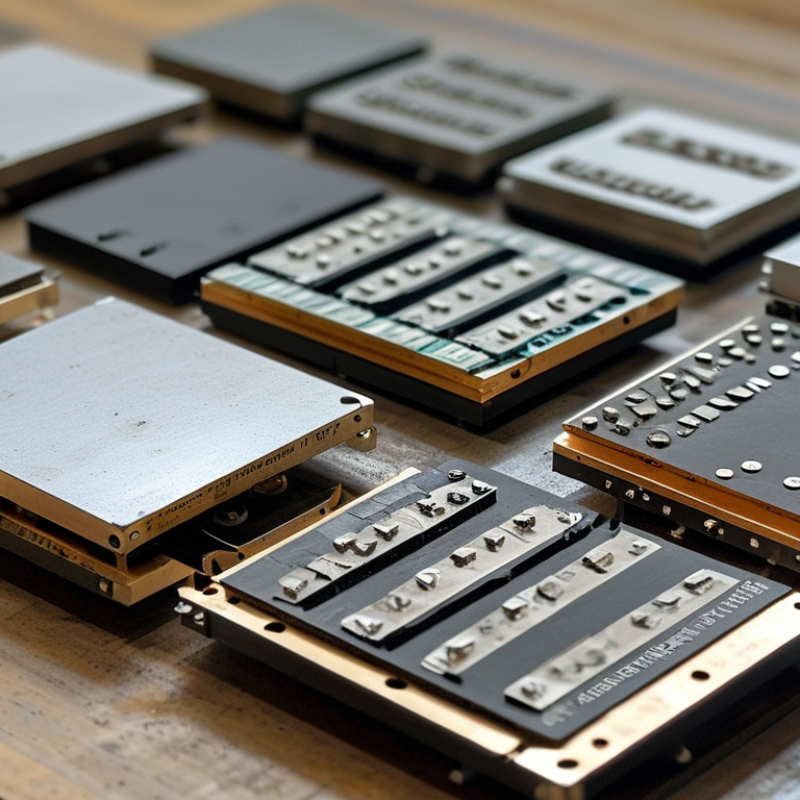
Aluminum PCB Buying Guide: Substrate Thermal Performance

Typical thermal-conductivity values help global buyers compare aluminum PCB constructions before reviewing thermal ratings, layer structures, and application requirements.

Single-layer aluminum IMS boards are commonly selected for cost-sensitive LED and power applications. Multilayer aluminum designs provide routing flexibility, while high-thermal-conductivity dielectric systems improve heat transfer. These are representative material values; the final thermal performance also depends on copper thickness, board area, vias, interface materials, and cooling conditions.

Evaluate PCB Manufacturers, Certifications, and Production Capabilities

10 Aluminum PCB Buying Tips for Global Buyers

Evaluate a manufacturer’s aluminum PCB experience beyond its sales presentation. Ask for recent samples with similar thermal loads, layer counts, and copper weights. Check whether the factory controls dielectric thickness, surface flatness, drilling, and solder mask alignment internally. These details affect heat transfer and assembly yield. Request process capability data, inspection records, and traceability for each production lot. A factory may claim high capacity, but actual monthly output and peak-season lead times matter more.

Review certifications carefully. ISO 9001 indicates a quality management system, while ISO 14001 reflects environmental controls. Depending on your market, ask for relevant safety approvals and material compliance documents. Verify certificate numbers, issuing bodies, validity dates, and covered manufacturing sites. A certificate alone proves little. Production audits, sample testing, and corrective-action records provide stronger evidence. Ask how the supplier handles nonconforming boards, engineering changes, and customer complaints.

Compare the manufacturer’s equipment with your design requirements. Confirm thermal conductivity options, aluminum thickness, copper foil range, minimum trace spacing, and solderability testing. Ask whether impedance control or automated optical inspection is available when needed. Packaging should protect boards from moisture, scratches, and edge damage during long-distance shipping. Keep communication practical: request drawings, inspection standards, and a pilot order before volume production. I have seen buyers focus too heavily on unit price. That choice can hide unstable yields, delayed reports, or inconsistent thermal performance. Recheck every assumption.

10 Aluminum PCB Buying Tips for Global Buyers - Evaluate PCB Manufacturers, Certifications, and Production Capabilities

No. Buying Dimension What to Evaluate Practical Target or Reference Required Evidence Why It Matters Buyer Check
1 Aluminum Base Material Review alloy, thickness, flatness, and thermal conductivity of the metal core. 0.5–3.0 mm aluminum thickness is common in many LED and power applications; thermal conductivity is material-dependent and should be stated in the approved datasheet. Material certificate, datasheet, thickness report, and incoming inspection record. Base material affects heat spreading, mechanical rigidity, weight, and overall thermal performance. Verify datasheet
2 Thermal Design Capability Confirm whether the manufacturer can design the dielectric layer, copper pattern, and thermal vias for the required heat load. Request thermal resistance data for the complete stack-up rather than relying only on the aluminum core conductivity. Compare results using the same test method and conditions. Stack-up drawing, thermal-resistance test method, sample test report, and thermal simulation assumptions. Actual PCB temperature depends on the complete board structure, copper distribution, interface material, airflow, and mounting conditions. Compare test methods
3 Dielectric Layer Quality Evaluate dielectric thickness, dielectric strength, thermal conductivity, adhesion, and breakdown performance. Specify the dielectric thickness and electrical requirements in the drawing. Dielectric strength must be verified under the applicable test standard and product conditions. Material datasheet, dielectric-strength report, peel-strength data, and cross-section analysis. The dielectric layer provides electrical isolation between the copper circuit and the conductive aluminum base. Approve stack-up
4 Copper Thickness and Current Capacity Check finished copper thickness, plating uniformity, trace width, spacing, and current-carrying capability. 1 oz copper ≈ 35 μm nominal and 2 oz copper ≈ 70 μm nominal before processing. Final acceptance should use the drawing tolerance and applicable IPC requirements. Copper-thickness measurement report, microsection report, impedance or resistance data where applicable. Insufficient copper or narrow traces can increase resistance, voltage drop, and heat generation. Check finished value
5 Manufacturing Standards Determine whether production and inspection follow recognized PCB workmanship and qualification standards. Use the applicable revision of IPC-A-600 for acceptability and IPC-6012 for rigid printed board qualification and performance requirements when relevant to the product. Quality manual, inspection criteria, process-control plan, and sample acceptance report. Defined standards reduce ambiguity about defects, tolerances, reliability, and final acceptance. Define class and revision
6 Certifications and Regulatory Compliance Assess management-system certification, environmental compliance, and product safety documentation. Confirm current ISO 9001 certification where required. For target markets, verify applicable RoHS, REACH, and flammability requirements such as UL 94 for the relevant insulating materials. Current certificates with scope and expiry date, declarations of conformity, material declarations, and test reports. Compliance requirements vary by destination market, product category, and end-use application. Check scope and expiry
7 Dimensional and Process Capability Review minimum line width and spacing, hole capability, board thickness tolerance, routing accuracy, and surface-finish control. Set values according to the design and manufacturing capability. Do not use generic minimums without confirming the selected aluminum stack-up and copper thickness. Capability study, first-article inspection, dimensional report, cross-sections, and tooling information. Aluminum-based structures can require specialized routing, drilling, deburring, and handling controls. Request capability data
8 Surface Finish and Solderability Compare surface-finish type, shelf life, solderability, contact requirements, and compatibility with the assembly process. Common options include HASL, lead-free HASL, ENIG, and OSP; selection should match component pitch, assembly temperature, storage time, and end-use requirements. Surface-finish specification, thickness report, solderability test, storage guidance, and process compatibility statement. Surface finish influences solder joint quality, corrosion resistance, contact performance, and total cost. Match assembly process
9 Reliability and Thermal-Cycle Testing Evaluate thermal cycling, solder-joint durability, dielectric reliability, vibration, and humidity testing according to the application. Require a test plan with temperature range, dwell time, cycle count, sample size, failure criteria, and applicable standard before approval. Reliability test reports, failure-analysis records, sample traceability, and corrective-action history. LED lighting, automotive, industrial, and power products may experience repeated thermal expansion and contraction. Approve test plan
10 Production Capacity and Supply Control Assess equipment, monthly capacity, lead time, engineering support, lot traceability, change control, and contingency planning. Confirm capacity for prototypes and mass production separately. Require agreed lead-time ranges, minimum order quantities, capacity reservation rules, and notification before material or process changes. Equipment list, capacity statement, production schedule, traceability samples, business-continuity plan, and change-control procedure. Stable supply depends on process maturity, capacity planning, documented controls, and the ability to manage demand changes. Audit before approval

Review Design Files, Testing Standards, and Quality Assurance Procedures

10 Aluminum PCB Buying Tips for Global Buyers

Review design files before requesting a quotation. I check copper thickness, thermal vias, mounting holes, and clearance around power components. A single missing stack-up detail can change impedance, drilling, and thermal performance. Ask the supplier to return marked-up Gerber, drill, and pick-and-place files. Keep the revision history visible. It prevents silent changes.

Testing must match the product’s risk. Require IPC-A-600 visual acceptance and IPC-6012 qualification requirements for rigid printed boards. For aluminum PCBs, request dielectric breakdown, thermal cycling, solderability, and insulation-resistance results. A thermal camera can reveal hot spots near LEDs or power modules. It is simple, but often overlooked. The U.S. Department of Energy reports that aluminum recycling uses about 95% less energy than primary production, so material certificates should also confirm alloy and recycled-content claims. Do not accept vague “passed” statements.

Quality assurance needs measurable evidence. Request lot-level reports, sample sizes, test methods, and calibration dates. ISO 9001 certification supports process control, but it does not guarantee every board is good. IPC’s 2024 electronics industry survey highlights continuing cost and supply-chain pressure, making traceability more important for global purchasing. I have seen polished reports with weak photos and incomplete failure records. That should trigger a second review. Suppliers should disclose nonconforming rates, corrective actions, and retention periods for inspection data. A perfect document pack is rare; honest gaps are easier to manage than hidden ones.

Calculate Total Costs, Lead Times, Shipping, and Long-Term Support

Buying an aluminum PCB from overseas requires more than comparing the quoted board price. Calculate the complete cost for your exact design, including tooling, testing, packaging, freight, insurance, duties, and local delivery. A supplier may quote 1,000 boards at a low unit price, but a 1.6 mm board with 2-ounce copper and a custom finish can change the calculation quickly. Request a written cost breakdown.

Lead time should cover engineering review, material preparation, fabrication, inspection, and shipment. Ask whether production begins after payment, drawing approval, or sample approval. For example, fabrication may take 8–12 working days, while air shipping adds another 3–7 days. Ocean freight costs less, but port delays can disrupt an urgent launch. Build a buffer.

Do not ignore long-term support. Confirm how the supplier handles repeat orders, design revisions, quality records, and nonconforming boards. A stable process matters when thermal performance affects product reliability. I once focused too heavily on the first quotation and underestimated replacement inventory. That decision saved money briefly, then created delays. It was not a perfect forecast. Review annual demand, storage conditions, and support response times before choosing a supplier. Ask for measurable commitments, not vague promises. You need evidence.